Last updated: March 2026
At a Glance
- Mental health apps can help support stress management, mindfulness, mood tracking, and emotional awareness.
- The best mental health apps offer different types of support, including meditation, therapy access, CBT-based tools, and AI-guided exercises.
- Apps like Headspace, Calm, Moodfit, and MindShift CBT can help users build healthy habits and coping skills.
- While apps can be helpful tools, they are not a replacement for professional mental health care.
- If symptoms such as anxiety, depression, or emotional distress start affecting daily life, speaking with a licensed clinician may provide more effective support.
From meditation tools to therapy platforms, the best mental health apps can provide accessible support for stress, mood tracking, and emotional well-being.
Mental health apps can be a helpful starting point when you’re trying to feel better but aren’t sure where to begin. They’re accessible, flexible, and easy to use from home. But they work best when you know what to look for, and when you know their limits.
Daily stress can take a toll on mental health, but developing healthy habits and knowing where to turn for support can make a meaningful difference. Fortunately, technology has made it easier than ever to access resources and tools to help us manage our mental health concerns. At the same time, apps are not a replacement for professional care. They can support mental wellness, but they aren’t designed to diagnose or treat more complex mental health or substance use concerns.
This guide covers the best mental health apps for anxiety, stress, mood tracking, and emotional support.
How We Chose These Mental Health Apps
To make this list more useful, we focused on apps that support different mental health needs (including meditation, mood tracking, therapy access, breathing exercises, and guided coping tools). We also prioritized apps that are widely recognized, actively maintained, and supported by research-informed mental health approaches.
Here are 10 of the best mental health apps for mindfulness, mood awareness, therapy access, and daily emotional well-being.
1. Headspace
Best for: Mindfulness and beginner-friendly meditation
Headspace remains one of the most consistently recommended mindfulness apps, with guided meditations, sleep tools, and structured programs that make it easy for beginners to build a habit. The app is designed to help users reduce everyday stress and anxiety, improve focus, and promote overall well-being. Guided meditations are led by experienced meditation teachers and are designed to help users relax and focus their minds. The app offers a variety of meditation options, a “Sleepcasts” feature offering soothing stories and soundscapes as well as moving meditation exercises designed to help users relax and unwind.
2. Calm
Best for: Sleep, relaxation, and stress relief
Calm continues to stand out for sleep support, guided meditations, and calming audio content, making it a strong option for people who want a gentler, more relaxation-focused experience. The app’s signature feature, “Sleep Stories,” includes soothing narratives voiced by celebrities to help users fall asleep naturally, while the “Daily Calm” feature offers short daily meditations to help users start the day with a clear mind.
3. Insight Timer
Best for: Free meditation content
Insight Timer is a meditation app that stands out for its massive free library of over 120,000 guided meditations and music tracks. Whether you’re new to meditation or an experienced practitioner, you’ll find sessions for everything from stress relief to better sleep.
The app lets you customize your meditation experience with a timer that includes peaceful background sounds and interval bells. You can also join live yoga classes and workshops led by experts from prestigious institutions like Stanford and Harvard. The app includes mood tracking tools and meditation stats to help you build a consistent practice. You can also connect with millions of other users through community groups and discussions.
The free version gives you access to most features, including guided meditations, sleep content, and live events. For offline listening and premium courses, you can opt for a subscription. The app works on phones, tablets, and computers, making it easy to maintain your practice anywhere.
4. Talkspace
Best for: Online therapy with licensed professionals
For people looking for app-based access to licensed therapists, Talkspace remains one of the most frequently recommended platforms for individual and text-based therapy support. It makes professional therapy accessible right from your phone or computer. The app connects you with licensed therapists through video sessions and messaging, letting you choose what works best for your schedule.
Talkspace partners with many major insurance providers, which could make therapy more affordable or even fully covered. Plus, the app keeps everything secure and private, following strict HIPAA guidelines.
5. Happify
Best for: Interactive exercises that build emotional resilience
Happify turns mental health support into an engaging experience through games and activities. Working with experts like therapists and meditation coaches, the app helps users tackle stress, negative thoughts, and build better emotional health. The app’s main feature is its “Tracks,” programs that guide you toward specific goals like managing stress or building confidence. An AI coach named Anna helps you stay on track and provides feedback along the way. You’ll also find daily tips and a supportive community where you can connect with others on similar journeys.
The free version includes plenty to get started: 18 learning tracks, games, journals, some guided meditations, and access to the community hub. The full version unlocks all tracks, meditations, and extra features like detailed progress tracking and character strength assessments. You can use the app on your phone or computer, making it easy to fit into your daily routine.
6. Moodfit
Best for: Tracking mood patterns and building daily mental health habits
Moodfit helps users track and improve their mental well-being through easy-to-use tools based on cognitive-behavioral therapy and mindfulness techniques. The app’s main features help you understand and manage your mood better. You can track how you’re feeling through mood journals, practice gratitude, and use CBT tools to work through negative thoughts. Moodfit also includes quick meditation sessions and breathing exercises for when you need to calm down or de-stress.
This mental health app lets you track things like sleep, water intake, and exercise to see how they connect to how you’re feeling. You can also check in on your mental health with simple assessment tools and join live meditation sessions with other users. Like many mental health apps, Moodfit offers both free and paid versions. The free version gives you access to basic mood tracking and mindfulness tools. For more detailed insights and customization options, you can upgrade to the premium version (with occasional discounts available), making it one of the more affordable options among mental health apps.
7. MindShift CBT
Best for: Anxiety-focused CBT tools
MindShift CBT is designed specifically to help people manage anxiety using evidence-based cognitive behavioral therapy techniques. Developed with input from mental health professionals, the app offers practical tools such as thought journals, coping cards, breathing exercises, and step-by-step strategies for managing worry, panic, and social anxiety.
Unlike meditation-focused apps, MindShift emphasizes learning how to challenge anxious thoughts and build healthier thinking patterns. The app also includes guided exercises for situations like public speaking anxiety, perfectionism, and overwhelming worry. For people who want structured CBT tools they can practice on their own, MindShift CBT provides a practical and easy-to-follow starting point.
8. Wysa
Best for: AI-guided mental health support and self-reflection
Wysa uses an AI chatbot to help users explore their thoughts and emotions through guided conversations, journaling prompts, and coping exercises. The app draws on evidence-based techniques such as cognitive behavioral therapy (CBT), mindfulness, and breathing exercises to help users manage stress, anxiety, and negative thought patterns.
Many people use Wysa as a private space to check in with their emotions, especially when they want support outside of therapy hours. For users who want additional help, the app also offers optional coaching from trained mental health professionals.
9. Balance
Best for: Personalized meditation and mindfulness coaching
Balance is a meditation and mindfulness app that adapts its guidance based on your goals, experience level, and feedback over time. When you begin using the app, it asks a series of questions about your meditation experience and what you want to improve, such as stress, sleep, focus, or emotional balance.
From there, Balance builds a customized meditation plan that evolves as you progress. The app includes guided meditation sessions, breathing exercises, and structured programs designed to help users gradually build mindfulness skills and develop a consistent daily practice.
10. Self-Help for Anxiety Management (SAM)
Best for: Managing anxiety with structured self-help tools
SAM (Self-Help for Anxiety Management) was developed by university researchers to help people understand and manage anxiety using practical self-help techniques. The app offers 25 different self-help tools, from breathing exercises to meditation and positive thinking techniques. SAM lets you monitor your anxiety levels and see how they change over time through easy-to-read charts. You can record your feelings, thoughts, and physical reactions to understand your anxiety patterns better.
The app includes a unique “Social Cloud” feature where you can connect anonymously with others managing anxiety, share experiences, and exchange helpful tips. You can build your personal “Anxiety Management Toolkit” with techniques that work best for you. Best of all, SAM is completely free, with no ads or hidden costs. While it’s not a replacement for professional help, it’s a great tool for learning to manage moderate anxiety on your own.
What to Look for in a Mental Health App
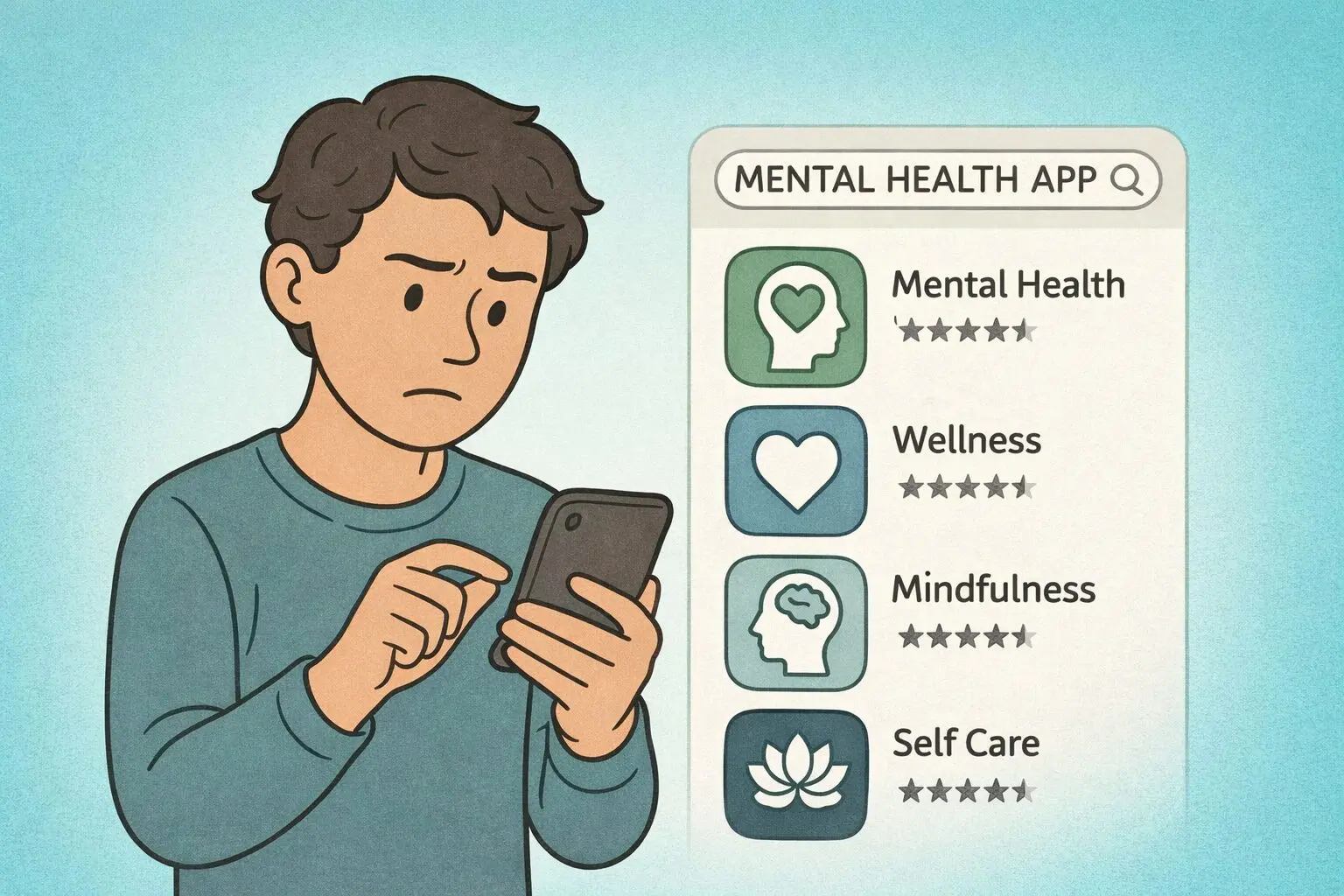
The best mental health app for you depends on what kind of support you’re looking for. Some apps are designed for mindfulness and sleep, while others focus on mood tracking, guided coping tools, or access to licensed therapists.
When comparing apps, it can help to ask:
- Would I benefit more from an app, a therapist, or both?
- Do I want self-guided support or live professional care?
- Am I looking for help with stress, sleep, mood, or anxiety?
- Do I want a daily habit-building tool or occasional support?
Do Mental Health Apps Actually Work?
Mental health apps can be helpful tools for managing everyday stress, improving mindfulness, and building healthier coping habits. Many apps are designed around evidence-based techniques such as cognitive behavioral therapy (CBT), meditation, and mood tracking. Research suggests that these approaches—when delivered through digital tools—can support emotional awareness and help some people reduce mild symptoms of stress, anxiety, or low mood.
However, mental health apps tend to work best as support tools rather than stand-alone treatment. While they can help people practice coping skills, track emotional patterns, or access guided exercises, they usually cannot provide the same level of personalized care as working directly with a licensed clinician. Studies of digital mental health interventions have found that mobile apps can improve symptoms for some users, but outcomes are generally strongest when digital tools are combined with professional support.
In other words, mental health apps can be a helpful starting point. They may make it easier to learn mindfulness skills, practice breathing exercises, or recognize patterns in mood and behavior. But if symptoms persist, worsen, or begin to interfere with daily life, speaking with a qualified mental health professional may provide more effective and individualized care.
When Mental Health Apps May Not Be Enough
Mental health apps can support mindfulness, mood awareness, and daily coping skills. But if anxiety, depression, or emotional distress is affecting your relationships, work, sleep, or overall quality of life, professional care may provide more effective support.
Talking with a licensed clinician can help you better understand what you’re experiencing and develop a personalized plan for recovery. For many people, combining daily tools like apps with professional care provides the most effective support. If you’re unsure whether what you’re experiencing is stress, anxiety, or something more persistent, the Stress vs Anxiety Quiz can be a helpful first step.
Mental Health Support and Co-Occurring Conditions
For some people, mental health symptoms like anxiety, depression, or mood changes are connected to substance use. When both are part of the picture, an app isn’t enough, and treating them separately often isn’t either. Eleanor Health provides virtual addiction and mental health treatment designed to support both substance use recovery and underlying mental health needs.
If both mental health challenges and substance use are part of what you’re navigating, treatment for co-occurring mental health and substance use conditions may be worth exploring. Eleanor Health is an addiction treatment program. If substance use is part of what you’re navigating (along with anxiety, depression, or other mental health concerns) our care team treats both together.
Sources
Firth, J., Torous, J., Nicholas, J., et al. (2017). The efficacy of smartphone-based mental health interventions for depressive symptoms: A meta-analysis of randomized controlled trials. World Psychiatry.
Torous, J., Nicholas, J., Larsen, M. E., Firth, J., & Christensen, H. (2018). Clinical review of user engagement with mental health smartphone apps. Evidence-Based Mental Health.
National Institute of Mental Health. Technology and the Future of Mental Health Treatment.